
Should You Buy or Sell a House in 2022? Don’t Base Your Decision on Headlines Alone

Whether you’re at a party, family get-together, work, or just talking to a neighbor, there’s a good chance you’ll hear people talking about how crazy the real estate market’s been. And you’ll probably hear people’s opinions on whether it’s a good time to buy or sell a house.

But what are they basing their opinion on?

Sometimes it’s just based on what they’ve heard second (or third) hand from a friend or family member. But a lot of times it’s “backed up” by what they’ve read or heard in the news, which is often just from a headline like, “Home Price Growth Is Finally Decelerating—and It’s Just the Start”, which Fortune recently published.

Someone who only read that headline could easily take that as a sign that prices aren’t going to go up as much in 2022, and that’s just the start! So, it’s an easy leap to think that must mean prices may even go down next year. That could easily cause a homeowner to sell in a hurry before prices drop. Or, it could cause a buyer to wait for prices to come down and miss out on a house that would’ve been perfect for them, only to find nothing changed, or (worse!) prices went up even higher.

If you actually read the Fortune article, it doesn’t entirely prove out the headline, or at least how most people would interpret it. In fact, the “deceleration” they refer to in the headline is a 0.3% dip in home prices between September 2020 and September 2021. It went from an all-time high of 19.8% year-over-year gain, down to a 19.5% gain. Okay, to be fair, that is a “start” as they said in the headline…but how much more deceleration should we expect if that’s just the beginning?!

Well, the predictions they cite in the article are all over the place for the next year:

  • Zillow predicts prices will rise 13.6%
  • Goldman Sachs predicts a rise of 13.5%
  • Fannie Mae expects a 7.9% increase
  • Freddie Mac thinks it’ll be a 7% bump up
  • Redfin is predicting price growth will only be 3%
  • CoreLogic sees it slowing to 1.9%
  • And the Mortgage Bankers Association is the only one cited with any amount of a decrease at 2.5%

To sum it up, according to the sources they cite, sure there may very well be a deceleration in prices, but that doesn’t mean prices will fall. Other than one source, they all predict that prices will continue to go up. More than half of them anticipate the growth rate to be higher than average…

…not quite what you may have thought if you just read the headline alone.

The Takeaway:

That’s just one example of a headline that could be misleading and cause you to judge whether it’s a good time for you to buy or sell a house. Much of what you see, hear, or read about the market tends to be too broad to make an informed decision, and the headlines can often be misleading. If you want a true read on the market and advice on whether it makes sense for you to buy or sell, your best bet is to speak to an agent who knows the local market.

**Ryan Wheeler is an expert real estate agent and military veteran serving buyers and sellers of homes in the Shreveport-Bossier City area.  Connect With Me Here

Feds to Increase Mortgage Loan Limits in 2022

Home prices have been rising dramatically; according to the Federal Housing Finance Agency (FHFA) House Price Index Report. Between Q3 2020 and Q3 2021, home prices increased, on average, a whopping 18.05 percent.

For many home buyers, higher home prices means needing access to higher mortgages—and the FHFA is taking action to ensure those buyers get the mortgages they need to successfully purchase property.

The FHFA recently announced that conforming loan limits for Freddie Mac and Fannie Mae-backed mortgages will increase in 2022. In 2021, the limit for a conforming loan was $548,250; in 2022, the limit will be $647,200—an increase of $98,950. Conforming loan limits for high-cost areas, like San Francisco and New York, will also increase based on median home values in the area, capping out at $970,800 (150 percent of $647,200).

The Takeaway:

So, what does this mean for you? If you’ve been struggling to find a traditional loan to cover the cost of a home, these increasing limits could help you get the financing you need at a competitive rate—and make 2022 the year you finally get to buy your dream home.

**Ryan Wheeler is an expert real estate agent and military veteran serving buyers and sellers of homes in the Shreveport-Bossier City area.  Connect With Me Here
Take Note Sellers—This Is What First-Time Home Buyers Are Looking For

First-time buyers are out in the market and ready to buy homes—and many of them are willing to go above asking in order to successfully purchase their dream property. According to a recent survey from realtor.com, a whopping 76 percent of first-time home buyers are willing to pay more than the asking price for a home.

But what, exactly, are they looking for in a property? According to the survey, some of the top priorities for first-time buyers in today’s market include:

  • A large backyard (35 percent)
  • A garage (30 percent)
  • An updated kitchen (30 percent)
  • A quiet location (26 percent)
  • Updated bathrooms (22 percent)
  • A finished basement (20 percent)

The Takeaway:

So, what does this mean for you? If you’re selling your home, it’s important to know what buyers are looking for. That way, you can bring attention to the features of your property that are most likely to attract buyers—and (hopefully!) fetch top dollar for your home in the process.

**Ryan Wheeler is an expert real estate agent and military veteran serving buyers and sellers of homes in the Shreveport-Bossier City area.  Connect With Me Here
Racing the Rates—Should You Sell Your House Now?

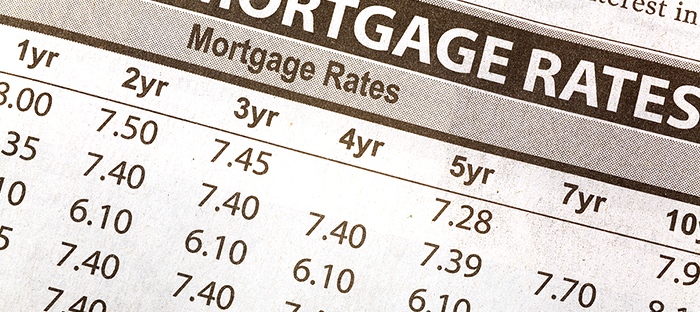
Typically it’s buyers who are most concerned about rising mortgage interest rates, and for good reason. A small jump in rates will cost them a few more bucks per month for the same house than it would’ve if they hadn’t waited to make an offer and lock in a rate. Add a few of those rate hikes together before they buy, and the added cost can be really aggravating.

Mortgage rates constantly go up and down, which is why they’re almost always in the news. It’s something to write about. Right now they happen to be going up again, as CNBC pointed out in this article about how rates jumped again and how it affects buyers. To summarize the big news, rates went up 0.35% in a week. Overall, not a huge deal. At least not enough to really change home values overnight.

But then they dig in a little more and added, “For a median-priced home, currently about $350,000, buyers putting down 20% will now see a monthly payment $125 higher than they would have just three weeks ago.” They’re going back three weeks to basically say that the monthly payment would be $125 more per month for the average buyer. That isn’t due to the one-week bump; that’s due to a few bumps over time. But it starts to add up, and buyers start to notice and feel it a little more.

Does this mean there’s going to be an absolute halt to the buying frenzy? No, at least not overnight. The market (and your home’s value) won’t turn on a dime and turn your dollars into dimes. But if the trend continues, and the news continues to point it out and alarm buyers, it could cause them to at least be less aggressive in how much they’re willing to pay in the near future. Or, perhaps they’ll just be less willing to get involved in a bidding war. Also worth noting: it could also come to a point, if rates rise significantly, where buyers simply won’t be willing to pay the prices they have been for a house.

After all, the value of homes is in large part based upon how much buyers can afford to pay per month, and what they want and will agree to buy for that much per month. So, if they get to a point where the rates are increasing their monthly payment too much, it will likely cause them to lower the amount they are willing to pay for your house.

There’s really no crystal ball to say whether or not rates are on an upward trend for good, or how high they’ll go. All you can deal with is the here and now, along with a little “what-if” assessing.

So, to sum up, if you’re even remotely thinking about selling, here’s a good two-step game plan:

  1. Get a firm grasp on what your house is currently worth in the market right now.
  2. Assess whether or not it makes sense for you to capitalize on the current value and sell now, or let it ride and see if the rates keep hovering and values continue to rise (or at least stay about the same).

**Ryan Wheeler is an expert real estate agent and military veteran serving buyers and sellers of homes in the Shreveport-Bossier City area.  Connect With Me Here
Renting a House Is Getting Way More Expensive. Is It Time to Buy?

Prices for everything have been going up—from food, to gas, to services, and people are getting less for the dollar. Rents are no exception.

After an unprecedented period of time where renters could more or less just cite COVID as a reason to not pay rent, the moratoriums on evictions are gone and rents are roaring higher—particularly with single-family rental houses.

People rent single-family homes for many different reasons, and it often makes sense to do so. If you’re relocating to a new area and aren’t sure if you’ll stay in the area for long, or want to get to know the area before buying a house, renting certainly makes sense. Or, perhaps it’s the only option due to credit issues, or the inability to obtain a mortgage for other reasons.

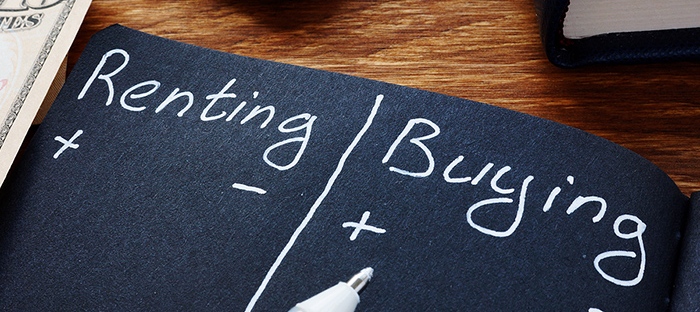
But one reason for renting that may need to be questioned is the notion that it’s more affordable to rent than buy, especially if you’re trying to rent a single-family house.

CNBC recently reported that single-family rents are up 10.9% year over year, which is three times the 3.2% annual growth seen in October 2020. At the most basic level, this is due to the simplest of economic laws, which is supply and demand. Vacancy rates are at a 25-year low, so there are less homes to rent and demand for them is high, so landlords can easily demand higher rents.

Much of this demand reportedly roots back to people who would otherwise buy a house, but decide to rent because they feel home prices are high, and the competition to buy houses on the market has been fierce. Valid reasoning…until and unless renting actually costs more than buying. With rent prices increasing, and the competition getting as fierce for rental homes as it is in the buyers’ market, it does beg the question whether it makes more sense to rent if you can qualify to buy a house.

While home prices have certainly risen in recent years, buying a house can hedge against inflation, especially when rates are low, according to this Forbes article. Locking in a low, fixed mortgage rate with even a low down payment is possible. So, it may make more sense to take advantage of the historically low interest rates (before they jump up), brave the competition, and spend the security deposit (and first and last month’s rent) on a downpayment to purchase a home rather than rent one.

Renting might end up being your best (or only) option, but it certainly can’t hurt to weigh which makes more financial sense. Just running on the assumption that renting is your best or only option could actually be costing you more than you think.

**Ryan Wheeler is an expert real estate agent and military veteran serving buyers and sellers of homes in the Shreveport-Bossier City area.  Connect With Me Here