
Bossier City Skyline

What First Time Home Buyers Need to Know: #8- The Appraisal

Are you a first time home buyer? With so many choices to make and so much at stake, it’s essential that you prepare. For advice, check out the First Time Home Buyer Guide from realtor.com® to learn the 10 steps to purchasing your first home without a hitch.

See the complete article Find out more here

Click Here to See if I Should Be Your Agent 

The home appraisal process is just a formality, right? You’ve found the house you love, put in a good offer, and it was accepted! Time to break out the Dom Pérignon White Gold? Sorry, not yet.

If you’ve applied for a mortgage, your home-to-be still has to undergo a comprehensive appraisal of its worth … and an unfavorable appraisal can kill a deal. Yikes! It can be a nerve-racking ordeal, but it’s actually good for you. Allow us to demystify the process.

The only way NOT to have an appraisal accomplished is when you are paying for a home with cash.  With cash you are free to pay more for a home all day long.  However, if you are taking out a mortgage on a property (as most people do) then the lender will want to make sure that home is actually priced properly according to the current market.  The appraiser provided an independent evaluation based on the comparable homes (or comps) in your immediate area.

Appraisals estimate a home’s value with fresh eyes

Just because you and the sellers have agreed on a price doesn’t mean it’s a done deal—your lender needs to be on board, too. After all, it’s the lender’s investment as well.

Enter stage left: The appraiser.

While the home appraisal process is somewhat similar to getting comps—as you did to determine a fair price—appraisers delve in much farther to determine the home’s exact value.

They’ll investigate the condition, the square footage, location, and any additions or renovations. Another key difference is that when you looked at the comps, you were probably hoping for a specific outcome—perhaps even some flaw that you could use as a bargaining chip to lower the price.

Appraisers, on the other hand, are trained to be unbiased, says Adam Wiener, the founder of Aladdin Appraisal in Auburndale, MA. “I don’t care what anybody wants the home to be worth,” he says. “I’ll give you the answer. You may not like it, but it’s the answer.”

You’ll get a copy of the appraisal, as well

Appraisers set out to determine if the home is actually worth what you’re planning to pay. You might be surprised how little time that takes; they could be in and out of a home in 30 minutes, and that’s not a reason to panic.

Appraisers aren’t home inspectors, who examine every little detail. While they’ll pay particular attention to problems with the foundation and roof, the home appraisal process includes noting the quality and condition of the appliances, plumbing, flooring, and electrical system. With data in hand, they make their final assessment and give their report to the lender. The mortgage company is then required by law to give a copy of the appraisal to you.

Appraisers work for your lender—not you

As the buyer, you’ll be paying for the home appraisal. In most cases, the fee is wrapped into your closing costs and will set you back only $300 to $400. However, just because you pay doesn’t mean you’re the client.

“My client is the lender, not the buyer,” Wiener says. This ensures that appraisers remain ethical—in fact, it’s a crime to coerce or put any pressure on an appraiser to hit a certain value. Appraisers must remain independent. “Anything less, and public trust in the appraisal is lost,” says Wiener.

They protect buyers from a bad deal

In essence, the home appraisal process is meant to protect you (and the lender) from a bad purchase. For instance: If the appraisal comes in higher than your asking price, it’s generally fine.   It’s always possible that the sellers could decide they want more money and would rather put their home back on the market, but in most cases, the deal will go through as expected because both parties are under a contract to purchase at the currently agreed upon price as long as funding is approved.

If your appraisal comes in lower than what you offered, this is where things get tricky: Your lender won’t pony up more money than the appraised price. So if you and the sellers agree on $125,000 but the appraisal comes in at $105,000, it creates a $20,000 shortfall. What’s a buyer to do? Read on.

An appraisal is not a home inspection

As previously mentioned the two are totally different. The inspector’s job is to make sure all the mechanical and subsystems are working and that there are no structural issues. The appraiser’s job is to observe the house in its current state, compare that with similar homes in the area and come up with a valuation. Put another way, appraisers typically work on the assumption that everything is in good working order, whereas inspectors verify functionality.

A curveball appraisal isn’t necessarily the end

If the appraisal comes in low and your contract with the seller was contingent on an appraisal, you could walk away and have your deposit returned. If you prefer to buy the home anyway (or waived your appraisal contingency), there are some other paths you can pursue:

  • Come up with the extra cash to cover the difference between the appraisal and offer price
  • Ask the seller to cover the difference
  • Challenge the appraisal and pay for a second opinion.  Although if it’s a VA loan that appraisal is on the books for 90 days

Keep in mind, though, that your new report could come out identical. Also keep in mind that if you do choose to walk away, that’s actually good news, although it may not seem like it at the time. Why? Because the appraisal kept you from paying too much for your home.

**Ryan Wheeler is an expert real estate agent and military veteran serving buyers and sellers of homes in the Shreveport Bossier City area.  Connect With Me

Bossier City Skyline

What First Time Home Buyers Need to Know: #7- The Inspection

Are you a first time home buyer? With so many choices to make and so much at stake, it’s essential that you prepare. For advice, check out the First Time Home Buyer Guide from realtor.com® to learn the 10 steps to purchasing your first home without a hitch.

See the complete article Find out more here

Click Here to See if I Should Be Your Agent 

A home inspection can be a terrifying process to newbie buyers: What if the house you adore has major problems hiding beneath that shiny new coat of paint? If you lie awake haunted by visions of mold or “foundation issues,” it’s time to take a deep breath. Here’s everything you need to know about home inspections, and how (as scary as they might seem) they exist to protect you from a very bad deal.

Here are some insights into how to make the most of this all-important step. OK, exhale.

What is the Home Inspection Process?

The Inspection Period is the specified amount of time agreed upon by both parties in which the Buyer may examine the property.  In Louisiana, this is the “due diligence” period which also allows you to back out for any reason if you find problems with the home that make you uncomfortable.

The time frame selected for the Buyer can range is usually between 10 and 14 days and must be agreed upon by all parties at the beginning of the transaction. The Inspection Period begins when the buyer and seller enter into a contract.  The Buyer must accept or reject the property within this period.

Buyers and Sellers should make sure the inspection period provides adequate time for any authentication and/or appraisal process that may be necessary to complete the transaction.

Hire a top-notch home inspector

While it may be tempting to hire any run-of-the-mill home inspector to get the job done—particularly if the price is right—the inspection is no time to cut corners. After all, buying a home is an enormous investment. “Everyone does themselves a disservice when they shop by price alone,” says Alan Singer of Sterling Home Inspections in Armonk, NY. “Plenty of inspectors don’t know what they’re doing and set up shop because it’s easy to do.

So, first, check your local requirements: Many states require an inspector to have a license or insurance, and not having either is a big, waving red flag. Even if insurance is not mandated, you’re better off choosing an inspector who is insured, which protects both of you against errors and omissions. Membership in a professional trade organization, such as the National Association of Home Inspectors, indicate the inspector is up-to-date on the latest developments in the field—another giant plus.

Attend the home inspection

Even though you will receive a written report after the home inspection, you should attend the inspection while it’s being done. It provides a valuable opportunity to learn all about the inner workings of your would-be new home. “I much prefer it when buyers are there so we can discuss the home in person,” Singer says. “It’s much easier to explain the ramifications of an issue when we’re standing in front of it.” Plus, it sure beats deciphering a 10-page report about HVAC or plumbing problems.

So, don’t be afraid to ask questions. Really stick your nose into the home inspection. You and your inspector will be looking at all sorts of things you might have skipped during your showings, like the attic and crawl space, and under the sinks. Don’t be scared to delve into the details. Even the best home will receive a laundry list of to-do’s and potential problems, and fixing them will be much easier with a hands-on understanding of the issues involved. Consider it free (and invaluable) fix-it advice.

Don’t panic (until it’s time to panic)

The vast majority of issues raised during a home inspection are repairable—after all, as Singer describes it, you’re buying a “used home.” Just like a used car or an old computer or second-hand clothing, there are bound to be problems. Some of them may be small and easily fixed, like leaky pipes and rattling doorknobs. But if an inspector discovers a major problem—with, say, the foundation or water intrusion—even that may not be a deal killer. In fact, it could be a bargaining chip you can discuss with the sellers before closing the deal.

Work with your real estate agent to determine the best approach. If your offer was contingent on a successful inspection (and most are), you have a good basis to request that the current owners make repairs before closing. You’ll want to get this in writing, along with provisions if the sellers fail to fix the problems.

But there’s no obligation for sellers to address the inspector’s discoveries. If they aren’t willing to shoulder the burden, you need to assess whether the cost of a new roof—or mold abatement, or fixing the foundation, or whatever the problem is—is worth the reward. With no solution beyond paying $30,000 from your own pocket, you might need to move on to a more habitable home. “People get very invested in the home they want to buy, and it all becomes a very overwhelmingly emotional experience,” Singer says. “But they need to listen to the advice of the inspector, take a look at the financial ramifications, and make a clear-headed decision.”

To Inspect or Not

Home buyers are often conflicted about whether or not to spend the money to hire a home inspector. The responsible answer to this question is… yes, absolutely. Let me say this about cost; the price of an inspection is generally $250.00 – $400.00. Compare that to the price of the house and I would suggest that it becomes fairly insignificant.

However, there are some exceptions to this rule; for example, if the buyer is a general contractor, he might be knowledgeable enough to do the inspection himself, or if the buyer is a professional investor with lots of experience, he may also do well. But, to the average person, buying a home and conducting a formal inspection is a must.

A good home inspector will bring to your attention everything that is wrong with the house so you can handle it accordingly.  Then there is the added benefit of being able to use the inspection report to get back to the negotiating table. I have literally saved buyers thousands of dollars in lowered purchase prices using a detailed inspection report.

Hopefully, all will go well and your home inspector will say it’s fine to move in.  The lender will then do the next step for you: Order the Appraisal

**Ryan Wheeler is an expert real estate agent and military veteran serving buyers and sellers of homes in the Shreveport Bossier City area.  Connect With Me

What First Time Home Buyers Need to Know: #6- Closing Costs

Are you a first time home buyer? With so many choices to make and so much at stake, it’s essential that you prepare. For advice, check out the First Time Home Buyer Guide from realtor.com® to learn the 10 steps to purchasing your first home without a hitch.

See the complete article Find out more here

Click Here to See if I Should Be Your Agent 

If you’re gearing up to buy a home, one bitter pill you’ve got to swallow is that you don’t just have to pay for the house itself. You’ll also need to open your swiftly slimming wallet for a myriad of costs, fees, and taxes—the infamous closing costs. It’s a wide variety of fees that average 2% to 3% of the home’s purchase price. So in Shreveport-Bossier City on a $250,000 home, your closing costs would amount to anywhere from $5,000 to $7,000.

After the stress of house hunting and the anxiety of the offer, you might feel like you can’t handle yet another hurdle. But closing costs are an inevitable part of the purchase process. Happily, there’s often wiggle room—at least on the costs that could be covered by the seller. Learn about what goes into your closing costs—and, even more important, how to whittle them down to size.

Inspection and appraisal fees

You won’t have much luck lowering appraisal fees—since the lender selects the appraiser, you’ll likely be stuck paying their costs without much room to negotiate. The home inspector offers more flexibility: Compare a variety of quotes to find the cheapest option. You even might be able to persuade the seller to cover some of these fees, depending on your market (this is less likely in a red-hot market). Granted, you won’t be saving a ton of money here, considering the average home inspection costs $300 to $500, but a couple of hundred extra never hurts.

Lender fees

Let’s hope you paid careful attention when shopping for your mortgage: Different lenders require different fees, and buyers should keep an eye out for “junk fees” like for the application, credit check, processing, and even the frustrating but all too common “miscellaneous” fee.

Also take a close look at the loan estimate you receive from your lender at the beginning of the process and compare it with the closing disclosure statement, which you’ll get three days before your scheduled closing. Make sure no unexpected charges snuck their way onto your bill.

Discount points

If you decided to pay for discount points at closing to lower your interest rate, well, the bill is due. However, with the current low interest rates, that might not make sense for many buyers anyhow.

Home insurance

No, you can’t negotiate the existence of home insurance (most lenders require it to proceed with the loan), but you can certainly shop around. With the average premium stretching to $1,034 in 2015, your insurance will be a large cost regardless—but researching companies and comparing quotes goes a long way toward decreasing your expenses.  You would be surprised to find that your national name car insurance company can’t often beat a smaller company half-way across the country that you never heard of.  It pays to shop around.

Title insurance

In many states, title insurance is a lender mandate that protects your ownership of the property, heading off a number of unsavory situations such as fraudulent claims, courthouse errors, liens, and family disputes. If your lender requires you to purchase title insurance, you can shop around for a better quote. Unlike home insurance, title insurance is a one-time fee, which can make its high cost (the average buyer pays $3.50 per $1,000 of purchase price) easier to swallow.

Sometimes, the seller will pay for title insurance; however, this is uncommon and may not be the norm in your state. Consult with your real estate agent to determine if this is an option for you.

Seller’s costs

Sneaky, sneaky: One easy way to avoid paying a mountain of closing costs is by asking the seller to cover some or all of the fees. You might not have much luck in a red-hot market, but then again, a seller might agree to cover closing costs if she is able to get the selling price she wants. This works for buyers who might be short on cash but can handle adding a bit more to their loan balance. FHA loans allow sellers to contribute up to 6% toward closing costs; VA loans allow 4%, and conventional loans permit 3% to 6%. Here in Louisiana, it’s traditional for a seller to pay all closing costs when given a full-price offer.  This doesn’t mean it will happen but a seller is usually more agreeable when their number has been met.

Some closing costs can be negotiable, but not many of them

The fee for a title search is the fee for a title search, and you don’t want to skip that because you definitely want to know that the home you are buying has a clear title. And taxes are taxes, so you won’t find any wiggle room there. But you might find some mortgage origination fees that are less expensive if you shop around for a mortgage.

But about the only surefire way to reduce closing costs is to pay cash for a house. And even then, you will still likely pay for an appraisal, home inspections, local, county and state government fees, escrow fees, bank transfer fees, taxes and insurance premiums. But you will spare yourself loan costs.

If you aren’t paying cash, fool around with a closing costs calculator to see what fun awaits you.

Timing

Most experts recommend closing on a house at the end of the month. Closing costs also include any interest that accumulates before the end of the current month—so closing on the 29th rather than the 1st of the next month will save you money.

But before you sign on the dotted line, there is one more consideration that might affect your closing costs—or even the entire purchase. Next up: the Inspection

**Ryan Wheeler is an expert real estate agent and military veteran serving buyers and sellers of homes in the Shreveport Bossier City area.  Connect With Me

Bossier City Skyline

New Construction, Open House, Presented by Ryan Wheeler

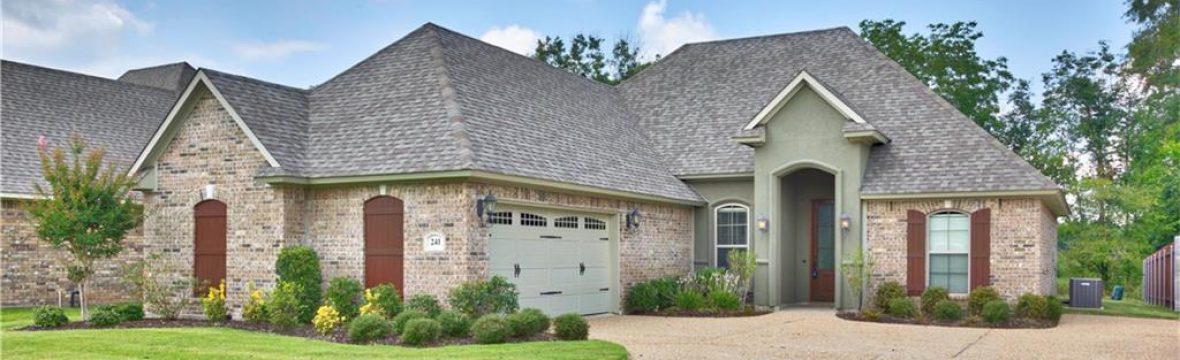
Price Drop! Beautiful New Construction with all the latest design trends and colors in this 5 Bedroom 3 Bath home. Remote master suite to relaxing while the main living area is perfect for entertaining 5th bedroom could also be used as Bonus room.

252 Poydras Ave, Bossier City, LA

open house

Presented By:

Ryan Wheeler

Realtor
RE/MAX Real Estate Services
318-572-6498
Licensed In: LA
License #: 0995693439

  • Link on Facebook
  • Connect on YouTube
  • Connect on LinkedIn

Logo

$ Click for current price
5 BEDROOMS | 3 (3 full ) BATHROOMS | 2,924 SQUARE FEET

Price Drop! Beautiful New Construction, all the latest design trends and colors in this 5 Bedroom 3 Bath home. Remote master suite to relaxing while the main living area is perfect for entertaining 5th bedroom could also be used as Bonus room.

Licensed in the state of Louisiana. Each office independently owned and operated.

Bossier City Skyline

Are You a Military or a Vet? 5 Reasons to Choose a Veteran-Friendly Agent

Are you a Home Buyer moving to Shreveport Bossier?  Do you need a military knowledgeable agent?

Click to here to learn more about me , a Veteran myself!

Adapted From Article Here

The home-buying journey can be uncertain, full of twists and turns you don’t see coming. Even if you’re using a Veterans Affairs loan—and taking advantage of the unique benefits that come along with it—you could still run into some big roadblocks along the way.

That’s why you need a savvy real estate agent to guide you. And while any agent technically can help with a VA purchase, an agent who’s particularly experienced with military buyers can help you better navigate the process. From pre-approval to closing, a military-friendly real estate agent will know what’s on the path ahead, and remove any obstacles in your way so you can get the house of your dreams.

Read on for five good reasons to consider a real estate agent who specializes in working with VA buyers—and how to find an expert in your area.

1. The agent understands the unique needs of veterans and service members

During the home-buying process, an agent should help you nail down criteria such as square footage, number of bedrooms, price range, and school district. But for many veterans, housing needs go far beyond that, says Twila Lukavich, a Realtor® with Russell Real Estate Services in Cleveland who has specialized in helping buyers use VA loans since 2009.

An agent who has experience working with military clients can help find the right home, with a special eye toward a veteran’s specific situation. For instance, a VA-savvy agent can help disabled veterans find housing grants or a home with adaptive renovations so that they can live independently in a barrier-free environment.

Lukavich also cites many of her clients who suffer from post-traumatic stress disorder and have specialized needs that most agents might not understand.

“An agent who’s not attuned to these seemingly random requests might not be as careful and devoted to understanding how important these requirements are when selecting homes to show a veteran,” Lukavich says. “Sometimes just assuring the buyer that we will be successful and work through any hurdles together is one of the most important contributions I can give.”

2. The agent’s prepared for an accelerated buying or selling timeline

Active-duty service members may have to relocate often and quickly, and that sometimes means buying and selling on tight timelines. Lukavich is used to streamlining the process for her military clients who are moving to the area, frequently performing a walk-through of homes via Skype and video for clients who may end up purchasing a home sight unseen.

“The majority of my active-duty buyers do not have the option to make a trip in person to view the home, which puts a lot of additional stress on them,” she says. “I am literally their eyes and ears with the purchase of their new home.”

And it’s not just about buying—if you have to sell your home quickly, a military-friendly agent can help get it done while not sacrificing on a profit.

3. The agent can steer you toward a knowledgeable lender

Most lenders will say they do VA loans, but those who lack experience often don’t understand the special circumstances or documentation required, says Michael Garcia, broker and owner of TQS Realty in Palm Beach, FL.

“I’ve had numerous veterans who used a conventional mortgage lender almost get denied at closing because they didn’t understand some nuance,” he says.

4. The agent understand the VA appraisal process

In most purchase situations, buyers understand that they may need to make some repairs to the home after purchase to get it move-in ready—from replacing electrical systems to repairing or replacing a worn roof. But to qualify for a VA loan, the house must meet a set of VA-designated Minimum Property Requirements.

While most buyers—and sometimes even agents—are focused on a home’s bells and whistles, a VA specialist has an eye for spotting the red flags that might need to be addressed before a VA loan can close, from broken window panes and rotten exterior wood, to torn flooring or missing light fixtures.

“If you are well-versed in MPRs, you can often tell upfront that in your professional opinion the house won’t pass the appraisal,” says Benny Dinsmore, a Realtor® with Coldwell Banker in Frisco, TX, who has 20 years of experience with military clients.

Property condition problems aren’t automatic deal breakers, but repairs will often need to be made to keep the deal moving forward.

5. The agent will ensure a condo or townhome is approved

Agents who are unfamiliar with VA procedures may be unaware that a condo community has to be “approved” by the VA, which means the organization has vetted the community for the following, among other elements:

  • Homeowner association bylaws
  • Financial statements
  • Any pending litigation
  • Occupancy numbers

While you can find the list of approved properties on the Department of Veterans Affairs website, a real estate agent who doesn’t regularly deal with veterans may not know to look.

“You don’t want to visit a place and fall in love, then realize you’ve wasted time and possibly money because your agent didn’t do their research,” Garcia says.

The good news is lenders may be able to help buyers get an unapproved condo development on the approved list. Talk with your lender for more details.

How to find a military-friendly agent

Some agents have earned specialized classifications such as the Military Relocation Professional® certification or Military Residential Specialist.

Besides looking for those specifications, one of the best ways to find a VA specialist is to ask around in your network. And then don’t be shy during the interview process.

While the coursework involved in earning the classification can help crystallize special circumstances that apply to VA loans, nothing substitutes for lots of experience, Garcia says.

“Whether or not your agent has a specific designation, if he or she can’t answer questions specific to VA loans, you should find someone who can.”

**Ryan Wheeler is an expert real estate agent and military veteran serving buyers and sellers of homes in the Shreveport Bossier City area.  Connect With Me