8 Things Home Sellers Should Never Reveal (Except To Their Realtor)

When homeowners decide to sell, they may find themselves justifying their choice to anyone who’ll listen. But, as the old saying goes, “Loose lips sink ships.”

In today’s world where sharing is the norm, sometimes keeping your rationale for making a move all to yourself is the right move. Though sellers would never intentionally want to harm their chances of securing the best deal possible, by being a little too honest, they can ultimately lose leverage when it comes to negotiating.

The following are 8 things home sellers should never reveal (except to their Realtor).

1. “These taxes are killing me!”

https://giphy.com/embed/RyzZoic5mBt84

via GIPHY

No one enjoys paying property taxes, but watching them spike over time can be a huge turnoff for some homeowners — particularly those who don’t take advantage of public school districts or other amenities funded by tax dollars. Still, sellers who share that they believe they’re grossly overpaying will cause buyers to think twice.

2. “I just want to live in a quiet neighborhood.”

https://giphy.com/embed/3oGRFIjETeuYgyLyo0

via GIPHY

Whether they’re surrounded by garage bands, screaming kids, or barking dogs, if sellers are moving to get a little peace and quiet, they’ll probably want to keep that info hush-hush. Even if would-be buyers seem like heavy metal head-bangers, sellers don’t want to let them know they haven’t had a good night’s sleep in months.

3. “The house needs a lot of work.”

https://giphy.com/embed/i9Fg9YcbOSNhe

via GIPHY

Old roof? Rickety porch stairs? Outdated kitchen? If sellers believe their home needs more TLC than they can handle, they shouldn’t discourage potential investors with their constant complaining. To DIY enthusiasts, the chance to purchase a “fixer-upper” may be just what they’re looking for.

4. “My neighbors are crazy.”

https://giphy.com/embed/XuZiNocebxgIM

via GIPHY

Living alongside quirky neighbors can make life a little difficult. But just because sellers and the folks next door haven’t become BFFs, that doesn’t mean they won’t appeal to new residents.

5. “I’ve had some pest problems.”

https://giphy.com/embed/yiUlXNOZDuJuE

via GIPHY

From spider infestations to termite troubles, these issues will likely turn up during a home inspection anyway. So, either deal with the pest problems ahead of time or prepare to hear about it when that report comes back. Either way, announcing it isn’t going to make the situation any better.

6. “I no longer feel safe here.”

https://giphy.com/embed/l2YSgdn0tmvotdOFy

via GIPHY

Safe can be a relative term. What feels like a dicey neighborhood to some may actually be a step up from where others lived previously. Buyers can do their due diligence by checking with local police departments for crime statistics.

7. “I have to move for work.”

https://giphy.com/embed/xUn3C8db51jS1LN1ny

via GIPHY

When sellers let everyone know that they absolutely must move, it could inspire potential buyers to make a low-ball offer. When there’s a sense of urgency or panic in a seller’s tone, it’s tempting for buyers to take advantage.

8. “We’ve outgrown this house!”

https://giphy.com/embed/xUPGcIj3cQ97KtLRug

via GIPHY

Just because owners may feel as if their house has been shrinking over time, that doesn’t mean it won’t seem like a palace to someone else. Let the square footage speak for itself. That said, decluttering and staging can go a long way toward making even the most diminutive dwelling seem bigger.

Bottom line?

Deceiving potential buyers is never the goal (doing this can land you in legal trouble) — but there is such a thing as “saying too much.” Don’t be a victim of your own words. Instead, let your Realtor do the talking for you.

Much like attorneys, Realtors are skilled professionals who know what to say, and when to say it. There are moral and legal parameters that dictate what should be disclosed, and you should give full reign to your Realtor in this regard.

**Ryan Wheeler is an expert real estate agent and military veteran serving buyers and sellers of homes in the Shreveport-Bossier City area.  Connect With Me Here
Barksdale AFB Spouses Movers Group | Facebook

Instantly Boost Your Home’s Curb Appeal With These Simple Strategies

When you’re selling your home, you only get a chance to make a first impression on buyers once—which is why curb appeal is so important.

If your home doesn’t look good from the outside, you’re not going to draw buyers inside—and, as a result, it’s going to be harder to sell your home. Upping your curb appeal will generate more buyer interest—and can help your home sell faster and for a higher price.

But how, exactly, do you do that? In a recent article, home design website Houzz outlined a few surefire strategies for increasing your home’s curb appeal, including:

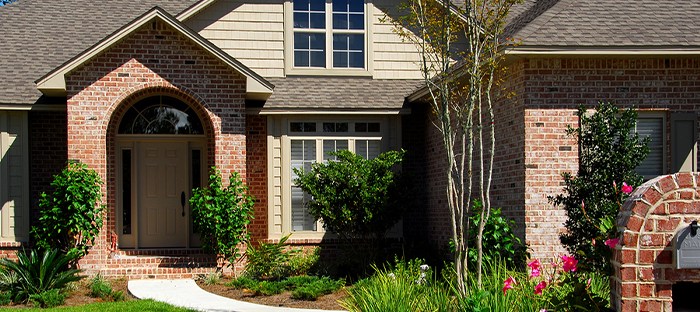
  • Landscaping. The condition of your yard is one of the first things homebuyers will notice—so both hard and soft landscaping the exterior of your home can make a huge impact in upping your curb appeal. Add a stone walkway to the front door, make sure your grass is in tip-top shape, and incorporate a variety of plants and flowers to add visual interest.
  • Paint. A fresh coat of paint on the exterior of the house (or even just on the front door!) is one of the easiest and most affordable ways to completely transform the look of your house—and increase your curb appeal in the process.
  • Overhangs. Adding an overhang to the front of your door adds both function (as protection from the elements) and style (adding visual interest and character to your home’s exterior).

If you’re thinking about selling your home, remember—you only get to make a first impression once. So, make that impression a good one by focusing on your home’s curb appeal!

**Ryan Wheeler is an expert real estate agent and military veteran serving buyers and sellers of homes in the Shreveport-Bossier City area.  Connect With Me Here

Barksdale AFB Spouses Movers Group | Facebook

Majority of First-Time Buyers Feel Unprepared For The Homebuying Process

For most first-time buyers, purchasing a home is the biggest purchase of their lives—but according to a recent survey, the majority of them don’t exactly feel prepared.

recent article from REALTOR Magazine outlined a survey from first-time homebuyer survey from real estate resource Framework, which found that the majority of first-time homebuyers feel unprepared to buy. According to the survey, only 41 percent of first-time homebuyers felt prepared for the homebuying process, while 44 percent said they feared making a costly mistake. And more than half of all first-time buyers—both prospective (58 percent) and recent (53%)—said the homebuying process was more difficult than it needed to be.

What does this mean for you? If you’re buying a home for the first time, you want to feel as prepared as possible—and that means working with a qualified real estate agent. The right agent will help you feel prepared for every step of the homebuying journey—and make the entire process of buying a home feel less complicated and difficult.

**Ryan Wheeler is an expert real estate agent and military veteran serving buyers and sellers of homes in the Shreveport-Bossier City area.  Connect With Me Here

Barksdale AFB Spouses Movers Group | Facebook

10 First-Time Home Buyer Blunders To Avoid

Homeownership is one of the central tenets of contemporary life. Most of us dream of a familiar, comfortable place to call our own, and buying a home is a rite of passage into adulthood, and into our own piece of the American Dream.

But until and unless you’ve been through the process at least once, there are plenty of mistakes many people make on their journey to property ownership.

If you’ve made any of these yourself, don’t feel bad—it can happen to the best of us. And if you’re an aspiring homeowner who wants to get ahead of the curve, take a look at the following things NOT to do when buying your first home…so when it’s time to pull the trigger, you’ll be ready to go!

1. Ask an agent to go see houses before getting pre-approved

It’s tempting to visit properties the minute you’ve made up your mind that you want to buy, but putting the cart before the horse can backfire spectacularly.

If you haven’t actually qualified for financing, you should hold off on going to look at houses with a real estate agent (or even going to open houses), since there’s no guarantee that a mortgage company can lend you the money. There’s no greater let down than finding a house you love, and finding out you can’t be approved for a mortgage in the price range of that house.

Besides, many sellers and their agents won’t even consider your offer if you don’t include a pre-approval letter. So, you should have it in hand in order not to lose precious time when you find “the one”.

Bottom line is…getting pre-approved is the first step in the homebuying process, so always start there.

2. Buy a home you don’t feel great about because of pressure from others

We’re all influenced by the people around us, whether it’s friends, parents, significant others, or even people on the internet. But don’t let the opinions of others guide your decision making when it comes to buying a home.

Everyone has their own taste, but at the end of the day, you’re the one that will be paying, and, more importantly, (literally) living in your decision. Make an offer because you want to, not because you think it’s what someone else wants you to do.

3. Pass on the perfect house over a trivial cosmetic feature

Real estate can be quirky, and there are plenty of aesthetic choices homeowners make that won’t work for everyone else. But if everything is great except for some cosmetic features, don’t walk away from the deal over something that can be changed later on.

Location is about the only thing you can’t change about a house, but everything else can be removed, remodeled, and replaced, so don’t pass up something that might be a great fit just because it happens to have an eyesore, or isn’t quite your taste.

4. Get hung up on properties outside your price range

The thing about dream homes is that they’re usually pretty darn expensive. And, it’s just human nature to want as much (or more) than we can afford. So, it’s pretty common for home buyers to find themselves longing for that perfect house that’s usually a few hundred thousand (or million) dollars outside their price range.

Don’t let these properties get you down. If you look hard enough, there’s going to be a great option within your price range. And who knows, maybe sometime in the future, that dream house might actually be within your budget.

5. Assume that your offer will be accepted

Making your first offer is a big deal, and you might think that since you’re putting so much money on the line that there’s no way someone could possibly turn it down. But the reality is a little more complex.

In a competitive market, sellers will often get multiple offers, or hold out for a higher price than you might be willing to go. There are a lot of moving parts, and there’s a good chance that if you saw something you liked about a house, some other buyer might have seen the same thing too. But don’t get discouraged—negotiations are common, and, if it doesn’t work out, another house will eventually come along.

6. Assume that once an offer has been accepted, the deal is done

An accepted offer is an important milestone, but it doesn’t mean the deal is done.

Between an accepted offer and closing, there are lots of moving parts and boxes that need to be checked: from financing, to inspections, to the title search, to seller’s circumstances—and unexpected things can happen throughout the process. While the overwhelming majority of accepted offers turn into closed deals, you should never assume that just because the buyer and seller have agreed, that the deal is finalized.

7. Make a big purchase or take out new debt before the closing

This has been the kiss of death for many real estate transactions. A buyer gets their offer accepted, starts the mortgage process, and then goes out and buys a car, or finances a bunch of new furniture for their new place. Then, once the mortgage company checks the credit report before closing—as they always do—the buyer no longer qualifies for the mortgage since they now have new debt that changes their debt to income ratio.

There’s a simple solution to this potential problem…don’t do it!

8. Forget to get an estimate of how much money you’ll need at closing

Many people do back-of-the-napkin calculations, or use an online calculator, to figure out how much money they’ll need to bring to closing. But it’s important to get accurate estimates from your mortgage lender, because if you don’t, you run the risk of being unpleasantly surprised, or worse, coming up short.

There are many fees associated with a real estate transaction, from closing costs, to state taxes and fees, to attorney’s fees, and you should be aware of all of them well before the closing day. You won’t be able to get an exact amount on your closing costs until you are close to your closing day, but you can and should get a good handle on how much to approximately expect.

9. Try to mislead the mortgage company

Most people wouldn’t do this, of course, but not only do you run the risk of not being approved for financing if you try to mislead your lender, you also might end up facing some legal issues down the road. There are some who—in an effort to get approved—might embellish, or flat-out lie on their mortgage application, but the only one that will ultimately be hurt by these lies is the borrower. Mortgage companies have rigorous screening and validation processes, and they usually uncover deception when it can’t be backed up with the proper documentation. So make sure you tell the truth, it’s the only way to go.

10. Work with an agent who doesn’t care

A real estate transaction is a complicated, sometimes stressful experience that requires a knowledgeable and level-headed professional to help guide you through the process. That’s why picking the wrong agent can have devastating consequences. Even worse than hiring an agent who doesn’t know the answers, is working with someone who doesn’t care. A great agent has empathy, and will make sure you feel good about things as you go through the process. So don’t be flippant about who you decide to work with, because the consequences are more impactful than you might think.

At the end of the day, buying your first home should be an exciting and rewarding experience. It’s a rite of passage, and you should be proud of yourself for getting there! If you’re in the market for a home, or are starting to consider it and have any questions you’d like answered, please don’t hesitate to get in touch.

**Ryan Wheeler is an expert real estate agent and military veteran serving buyers and sellers of homes in the Shreveport-Bossier City area.  Connect With Me Here

Barksdale AFB Spouses Movers Group | Facebook

10 Things You Should Never Say To A Real Estate Agent

Let’s be clear on one thing: by nature, real estate agents are not fragile beings. We’ve heard it all. And for the most part, we have a great sense of humor about things. In other words, you can tell us virtually anything — in fact, you should if it’s pertinent to buying or selling your home.

It’s just that there’s a handful of things clients say that can rub us the wrong way. These things aren’t offensive, per se’, and you probably mean no harm when saying them. But we need to discuss these things. Thus, this list. Let’s file it under “edutainment” — important enough to warrant a dialogue, but light enough for you to realize it’s not the end of the world if you’ve said these things to an agent in the past.

Here they are.

1. “I want to buy a home, but I don’t want to commit to one agent.”

Loyalty is a two-way street. If you want an agent’s help, understand that he or she will spend a considerable amount of time, money, and effort shuttling you from house to house, scheduling home viewings, and previewing listings on your behalf. The tradeoff for this hard work is to sign a buyer’s agency agreement, allowing them to formally represent you as a client (versus merely a customer). There are major differences between the two. Learn more about agency relationships here.

2. “Don’t show my home unless I’m available.”

Look down. See a hole in your shoe? That’s because you’re shooting yourself in the foot. Real estate agents are busy. Therefore, if you want to maximize your home’s exposure, you’re gonna have to be flexible (i.e., as “hands off” as possible). I get it, though. You cringe at the thought of muddy shoes dragging across your beige carpet (or whatever else your concern may be). You naturally want to be present to keep an eye on things, but try to control that urge. Buyers get uncomfortable with sellers standing over them while they view a home — and that’s if you’re lucky enough to draw the buyer inside in the first place, considering all the hoops created by stipulating that other people’s schedules must align with yours.

3. “But Zillow said…”

Stop listening to Zillow. Relying on Zillow to determine your home’s value is, at best, a crapshoot. Zillow itself even encourages buyers, sellers and homeowners to conduct other research such as “getting a comparative market analysis (CMA) from a real estate agent” and “getting an appraisal from a professional appraiser.” Sure, Zillow’s Zestimates® are quick, easy, and free… but so is dating advice from your thrice-divorced Uncle Larry. The point? Just let a local real estate professional (who will actually see your home’s unique features in person) determine its fair market value.

4. “I’ll get pre-approved for a mortgage later.”

This puts you at a huge disadvantage right out of the starting block. First, an agent worth his or her salt won’t agree to invest countless hours showing homes to someone who isn’t approved for a loan. Secondly, it’s an unfair burden on the seller to bring tire-kickers into their home (which is how you’ll be perceived). Therefore, listing agents and sellers will often require a pre-approval letter alongside your offer. This letter strengthens your offer by instilling confidence in all parties that you’re financially capable of purchasing the home.

5. “I don’t want to bother my Realtor®. Can you just show me the house?”

Not just no, but heck no. To be clear, you’re more than welcome to view it, but there’s a protocol in play here. Contrary to what you think, asking your agent to see a home is not “bothering” them. It’s their job. It’s how they get paid. It’s what they love doing. If there are extenuating circumstances preventing your agent from showing you a home, let him or her call the listing agent directly. Don’t worry, you’ll get to view the home one way or another. But if you’re already represented, then going straight to the listing agent is considered is a faux pas in this industry (and a bit of a slap in the face to your agent). Just don’t do it.

6. “Real-a-tor”

The correct pronunciation is Real-tor. No need to throw that extra syllable in there.

7. “Oh, you sell real estate? You must make good money.”

Hold your horses… not necessarily. According to NAR (National Association of REALTORS®), the median gross income of REALTORS® was $42,500 in 2016, and that’s before expenses like MLS fees, marketing, insurance and everything else. Also, keep in mind that commissions are split between the brokerages representing the buyer and seller. In other words, of that X% you paid your agent to sell your home, he or she saw only a tiny fraction of that.

8. “I’m planning to sell my home by owner. I just want to know how to do it.”

We all know that time is money, but so is knowledge. It’s not always free, and it certainly can’t be passed from one brain to another through osmosis — especially not how to sell a home. So if you ask this question to an agent, don’t be offended if you don’t get the answer you were seeking. It’s not that agents want you to fail… it’s just that advising you how to sell a home isn’t as easy as, say, forwarding a recipe for chocolate pound cake. I should know. Many people tried to replicate my grandmother’s chocolate pound cake. They even had the recipe. But they all failed miserably, every time. Bottom line? If you want to benefit from experience, be willing to pay for it (especially when it comes to real estate).

9. “I’ll only sell my home to a buyer who is (insert race, gender, religion, etc. here)”

This is a big no-no, and one that’s liable to get you sued (unless, of course, you list with a real estate professional who’d certainly know better than to discriminate). Federal equal housing laws were passed in 1968 in the wake of the Civil Rights Movement, and they prohibit renters and home sellers from discriminating against individuals on the basis of race, sex, religion and other factors. So in a nutshell: focus on getting your home sold, and forget about to whom.

10. “I’d love to get paid to look at pretty houses all day, every day.”

So would agents. “Looking at pretty houses” is only one of about 184 things real estate agents do for their clients. And they only get “paid” when a home closes.


**Ryan Wheeler is an expert real estate agent and military veteran serving buyers and sellers of homes in the Shreveport-Bossier City area.  Connect With Me Here