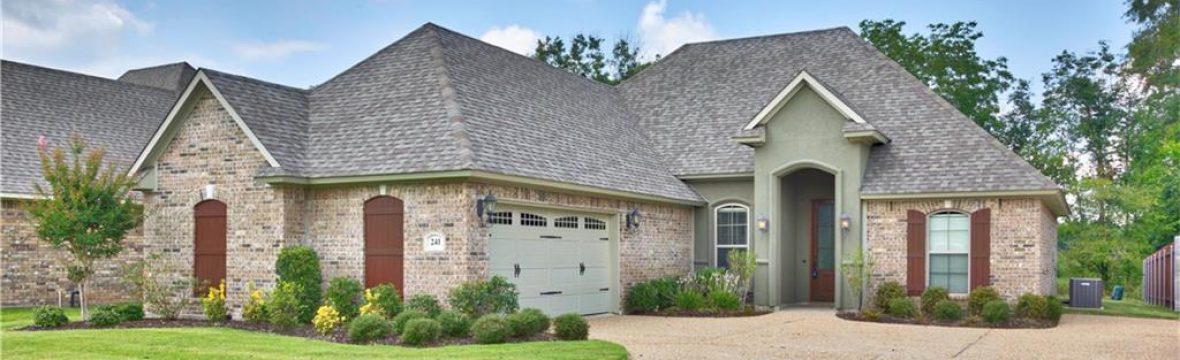
My Journey from Client to Agent

Many moons ago the Air Force stationed me at Barksdale right here in Bossier City. I did not have any experience in buying a home (hey, we were all once first-time home buyers, right?) but I nonetheless stepped out of my comfort zone and trusted a local agent to help me through the process.

Honestly, I don’t recall much about that experience except to say there were no hiccups and everything went smoothly. But I don’t recall my real estate agent teaching me anything, helping me through the process much, anticipating my needs nor educating me so I could make decisions that were in my best interest and not theirs.

It was more like a hand’s-off approach … but it all, miraculously, worked out. Even though it wasn’t a terrible experience I knew it could have been much better. It was then that I decided, no, I knew that I could do things so much better … if I were ever provided the opportunity.

The Air Force ended up sending my family and I back to Barksdale AFB two more times which allowed me to experience the buying process and working with different agents again. But this time there was a difference. And the difference was the agents. These are people I still know to this day and call friends.

They took the time to listen, they cared enough to course correct me and make sure I made good decisions, they walked me through the steps, the process and all the paperwork, explaining everything to me. They did it all with such grace and ease. I was immediately impressed by their professionalism and high standards of integrity and patience.

When I decided to throw my hat in the ring and became an agent myself I knew exactly what service, integrity and professionalism looked like because I had witnessed those qualities firsthand myself. I knew what it took to not just be a good agent but an expert who cared, who wasn’t afraid to be honest and tell the truth (even if the truth is hard to say and hear) and who valued integrity and honor in an industry where most people forget their previous agents’ name.

I didn’t want to be forgotten. That’s not a good place to be and that’s not where I belong. I choose to be different because, well, because I was once where you are. I was once needing more help than I knew. I needed a professional on my side to help me buy and also sell, who knew what I needed before I even did and helped me to get results.

I know I still have a lot of work to do but I have had great role models and mentors. I believe in always growing and doing better. The past several years as an agent has refined and honed me. Humbled me and grown me. I am now in the daily process of becoming that which I wanted to be and taking the road less traveled has made all the difference.

**Ryan Wheeler is an expert real estate agent and military veteran serving buyers and sellers of homes in the Shreveport-Bossier City area.  Connect With Me Here

Bossier home house photo Shreveport Bossier Expert Real Estate Agent Realtor Military veteran buy home sell house Ryan Wheeler

The Best Ways to Increase the Resale Value of a Home?

Some of these simple upgrades can easily add thousands of dollars to your home’s value. Looking to resell soon? Why not spend a couple hundred and get a back a couple thousand.

10 Affordable Fixes, after doing massive research over the past 2 years. Here’s what we found worked the best.

  1. The Kitchen.
  2. Counters.
  3. Bathroom.
  4. Organization.
  5. Motion Sensors.
  6. Add some color.
  7. Install modern wall outlets.
  8. Light dimmers.
  9. Front doors.
  10. Your lawn matters.

1. Spruce up the kitchen.

The kitchen is still considered the heart of the home. Potential home buyers heavily weigh this area when they first walk-through a home for sale, so make sure your kitchen looks clean and reasonably updated.

For a few hundred dollars, you can replace the kitchen faucet set, add new cabinet handles and update old lighting fixtures with brighter, more energy-efficient ones. Stick to LED lighting that reflects the sun, it gives a better hue and has a warm light to it, around the $3,000K mark.

If you’ve got a slightly lower budget, you can give the cabinets themselves a makeover. Rather than springing for a whole new cabinet decor, which can be expensive, look into hiring a painting company to repaint your cabinets professionally or do it yourself if you have some experience with painting. The reward is worth the work and it will give a brand new face and feel to your kitchen.

“Many companies can remove cabinet doors and drawers, refinish the cabinet boxes, then add brand-new doors and drawers. With a fresh coat of paint over the whole set, your cabinets will look like new.”

If you’re handy with paint get ready for number 2.

2. Give your counters some Pizazz.

If your kitchen appliances don’t match, order new doors or face panels for them. Word of advice: Walk in to your home and pretend like you’ve never lived there, what are your first thoughts? What do you think should be changed and what colors would work better? I’ve found that some color re-matching can work really well, especially for the kitchen.

Take for example marble counter-tops and white decor for the kitchen, the colors are completely different with the marble having lines of black and brown and sometimes even blue and purple, but the colors seem to work perfectly together. Do the same for yourself, try and see what colors in nature already match and go with that. Or simply google interior home decor and you’ll get great ideas of what might and might not look great in your home.

3. Bathroom looks a bit, horrible?.

Next to the kitchen, bathrooms are often the most important rooms to update. They, too, can be improved without a lot of cash. Even simple things like a new toilet seat and a pedestal sink are pretty easy for homeowners to install, and they make a big difference in the look of the bath. Take into consideration changing the colors of the towels in the bathroom as well. Simple changes in lighting can also make a big impact.

We also suggests replacing an old, discolored bathroom floor with easy-to-apply vinyl tiles or a small piece of sheet vinyl. The thing is, instead of replacing the old floor like you used to, you can now add vinyl tile that goes right on top of the old flooring. It’s pretty easy and simple to do.

If your tub and shower are looking dingy, consider re-grouting the tile and replacing any chipped tiles. Or consider hiring a professional to completely bleach the inside of the tub, in most cases the charge is around 20 dollars and the change in the white color spectrum is dramatic and worth it.

4. Start organizing everything.

Old houses, particularly, are notorious for their lack of closet space. If you have cramped storage areas, I suggest adding do-it-yourself cabinets and clothing hangers to open up the area and add some more space in there. In the end, your closets will be more functional and open spaced as well as customization which will make your home more attractive to potential buyers when you’re ready to sell.

5. Add a motion sensor or two.

In bathrooms, living rooms and closets and garages, adding a Motion sensor can make a SIGNIFICANT difference. Remember in the office when Michael Scott (Steve Carell) was no longer part of the shower because of a contract issue? Well, yeah. do you really want the office without Michael Scott? Yeah I didn’t think so. Same goes for motion sensors in specific rooms.

Take the garage for example, wouldn’t you rather have the lights turn on for you automatically while you’re driving in instead of pulling up in the middle of the night, fumbling through the dark with groceries in hand hoping not to trip over someone’s shoes, to turn the light on yourself just so you can walk through the door then hopefully remember to turn the light off? Again, I didn’t think so. The convenience is there, the price is there and the boost is there. It definitely adds appeal to people looking to buy your home. One less thing for them to do, that just so happens to be super cheap for you.

There’s no reason not to add a motion sensor, especially when you can most likely do the job yourself, as all it really takes is turning off the power, removing the switch, wiring the new one, and that’s it. I’ve done this for every switch in my home from dimmers to smart switches. Each one takes about 2 minutes to replace. Done.

6. Stop and smell the flowers.

I recommend spending a few bucks on some beautiful colors. It doesn’t take much money to drive to your local hardware store and pick up some really nice roses that you can lay on the side of your home or your backyard. Maybe pick up a couple of different flowers that flow with the color of your home and see what best matches. The employees working in the flower area have been there for a while and are a lot more experienced that you might think, most of them have flower gardens of their own or are just generally very knowledgeable. They do have to answer questions like the ones you may have everyday so it’s safe to say that they have their fair share of experience.

7. Look at the small details, then make sure they’re High-Speed Powered.

Charging adapters is another detail that can quickly clutter up the home and make it look “dirty” and “busy”. A professional electrician is an inexpensive investment, especially if your adapters are all over the place and are making every outlet stick out with adapters.

If your outlets are showing some serious ware. Replace them, immediately. Not only are they a potential fire hazard to everyone in the home, but the can cause other issues like short circuiting the electrical wires and potentially over powering something plugged in. Replace them with newer USB powered outlets. Not only will they remove the potential threats from an old rustic outlet but they improve your homes modern feel and get rid of the bulky adapters that are plugged in and taking up more space then they should.

8. Let there be Light! …and then remove a little.

If you have boring recessed lights in your dining and living rooms, consider replacing one of the room’s lights with an eye-catching chandelier. And then take it a step further by adding some dimmers to your lighting. It helps when going to the bathroom at night and not burning your eyes with an instantaneous burst of light and also just helps saves some energy around the house.

We recommend sticking to LED lighting and light bulbs, not only are they energy efficient but they brighten the room better than other types like incandescent and halogen. We recommend LED dimmers that are fully capable of dimming from 0%-100% as that should be the norm of any dimmer. Some are only able to go down to 10%, and while that’s fine, you will never be able to completely shuts the light off with just the knob but also by flicking the ON/OFF switch that they come with.

9. Add a little personality to your first impression.

Do you have a flimsy little knob on your main entry door? Is your door color white just like every other home in the neighborhood? If so, spring for a substantial-looking handle-and-lock set. “A nice, big piece of hardware on the front door signals to newcomers that this is a solid home,” says Niel from porch.com

Also, if you’re stuck with a basic white front door, we suggest painting or faux-finishing it for more eye appeal. It’s becoming very common to see regular white doors in front of every home in the U.S, why not change it up a little? Colored doors add for a showstopper impression and make any home look more vibrant and unique. Take the Pink door in Palm Springs, now a very famous stop for “instagrammers” looking to get those extra likes on their profile. It’s very uncommon for people to go the route of the colored door, change that. It can pay off big time when it’s time to sell.

10. Consider some curb appeal, scratch that, consider IT as much as you can!

Although it sounds obvious, a nicely mowed lawn, a few well-placed shrubs and a swept walkway makes a great first impression. What buyers see when they first drive by your home is tremendously important, especially for those looking to purchase it. For many, the very first impression can be the immediate selling point that they need to make that jump, and sometimes offer more money that you have it listed for.

If you don’t have a green thumb, consider hiring a landscaper to install some new sod, plant a few evergreen shrubs and give your front yard a good cleanup. These kinds of changes can instantly change people’s perception of your home and, therefore, increase its value. Landscaping keep me up isn’t all that expensive, we’ve seen some for about $100/month around the orange county area if you just do some research and look. We do recommend investing in a lawnmower and a couple gardening tools to do the work yourself as it will save you a lot of money throughout the year. But if you have the green to keep up the green, then we say go for it.

**Ryan Wheeler is an expert real estate agent and military veteran serving buyers and sellers of homes in the Shreveport-Bossier City area.  Connect With Me Here

Bossier home house photo Shreveport Bossier Expert Real Estate Agent Realtor Military veteran buy home sell house Ryan Wheeler moving

Should a Seller Stay for a Home Showing?

Question: “I’ve never sold my house before. Why is it frowned upon to be present when potential buyers are looking?”


Bottomline: You might say something that impacts the sale – almost always negatively.

The buyers can’t, don’t or won’t start to think of the house as something they could live in if the owner is there.  As the seller you want a prospective buyer to think of themselves living there.  They can’t do that when they see you, Mr or Ms. Seller, watching every move they make.

Seriously, now, just reverse the situation.  Would you want an owner there as you walk through a house?  Doesn’t that just feel a bit creepy?

You want them to be able to freely talk about your choices – paint colors, decorating choices, wallpaper, etc.  How poorly designed the kitchen it for them, that the bathroom may need to be remodeled. All of these things were great for you, but it may not be for them. You want them to be comfortable discussing these things with their realtor and between themselves. If they can work out what they would do with your house to make it better for them, they might buy your house They won’t discuss those things if you are there.

Besides, anything you hear could make you become defensive and say something you shouldn’t say or start to think twice about the entire process.  It places added and undo stress upon you, your real estate agent and can cause an unpleasant and uncomfortable experience for the buyer.

You, the seller, want the potential buyers to start thinking about how their furniture will fit in your house, how they might use the extra room up front, how their child would have fun in the new playset in the back yard.

The buyers don’t want to hear the stories about your kids, your family,  your experiences in the house or the latest upgrade you made and how much it cost you to do so.  They have a tough time imagining themselves there as it is anyway … make it easy for them.

Honestly, sellers, in their eagerness to try and get their home sold, just don’t know when to remain quiet.  In a desire to be helpful and because you’re proud of your home they want to highlight or amplify what they think is important or what matters but that may not at all be what the potential buyer cares about.

So all you, the seller, have now done is pushed the buyer away instead of drawing them in, which is the exact opposite of what you were trying to do.

Ok, here are a few more reasons why not to be present during the showing of your own home….

1) People are very judgmental.  You may be having a bad day, not looking your best, etc.  They will judge you just by the color of your socks or the way you wear your hair that day.

2 ) Buyer’s will pick you apart and play you like a fiddle, trying to find any reason why NOT to buy your home or any reason to negotiate you down off the price. And remember a buyer’s agent is not your friend!  They work for their client not for you.  If you as a seller want to tip your hand and give away information that can harm you in a negotiation then by all means …. So anything you say can and will be used against you!

3) Most people who have expensive homes don’t hesitate to let their homes be shown without being present, but people with the less pricey homes sometimes act like their house is the last houses on earth.  My job as an agent is to walk thru with my client but people are not there to rifle through your belongings.  They are just going to walk through the house and try to imagine themselves living there

  • The buyers don’t want to see you because they want to discuss the home freely without the sellers being present. Your presence makes you look desperate and makes the buyers uncomfortable.
 

Trust your realtor and their realtor. Let them do their jobs.

If you must be there, just be there for a moment to meet, greet and go!  Let them in and go run errands or go grocery shopping. Let them know to take their time.  And oh yeah, pen up your animals and take them with you!

**Ryan Wheeler is an expert real estate agent and military veteran serving buyers and sellers of homes in the Shreveport-Bossier City area.  Connect With Me Here

Shreveport Bossier Expert Real Estate Agent Realtor Military veteran buy home sell house Ryan Wheeler moving

The Six Things No One Tells A Home Buyer

A lot of this should be taken care of by your Realtor as part of the purchase process. But sometimes things get overlooked or there’s confusion if you haven’t done something before. So here are some important tips to be mindful of:

1. Make sure you get a good home inspector. Do whatever it takes. Double-check with your Realtor that they have an inspector that finds all kinds of things. It’s better to get a depressing report that lists every teeny item than to have them miss anything. Do not wait until you close for looking for damage! If you do, then you’re stuck paying for it and fixing it yourself. When you find issues (like, say, water damage or termites), then you include it in the negotiations to either lower the price or to have the seller fix the issue at their expense. If, instead, you wait until it’s too late and check on your own, or check after closing, then you have to handle all the repairs at your own expense and on your own. It’s the inspector’s job to find almost every single thing that could be a problem in a house you’re buying. This includes things like:

-Water damage. (Unless it’s hidden by something permanent, like drywall. Even if it’s been painted over or covered with carpet, a good inspector will know what to look for.)

-WDO (Wood Destroying Organism) damage or any signs of WDOs. There’s a number of ’em out there and a good inspector will see signs of any of them and any damage done by them.

-Pests in general, such as rodents and insects. Even snakes. (Yes, sometimes snakes find their way into homes and live in the crawlspace or attic.)

-Mechanical issues. They should start up the HVAC system and test it to be sure it’ll heat and cool and that it’s all working properly. If you’re on a well, or have septic, they’ll check what they can, but you can never really be sure if the septic is about to be an issue.

-Roofing issues and leaks.

Possible indications of upgrades or renovations that were not done to code. (Sometimes this stuff is hidden by drywall, but they’ll find what they can.)

2. Be sure you have a thorough title search. Every now and then I’ve heard of a property changing hands without a full title search. This process is done by the Title company, but make sure a thorough title search has been done. The biggest thing is to make sure there is no tax lien or dispute of ownership.

3. Be sure to plan out the items that are easier to be done before moving in. For instance, if you want to paint all the interior (not uncommon!) then it’s probably easier to do that before you move in and start thinking about decorating. If you want to start getting stuff in the house, paint the bathroom and the largest room (or rooms). Then you can move the bed and some clothes in and put everything else in the big rooms while the rest of the house is painted.

4. Call Zoning and Planning. If you want to put any additions on, at all, even 10 years down the line, call Z & P before making your offer on it. Give them the address and let them look it up. Find out if there are issues with setbacks, wetlands, flood plains, or zoning regulations that would keep you from doing any additions or renovations you would want to do in the future.

5. Check on any HoAs or if there are any covenants. If there are any, the owner should know and inform you about them, but a good title search will help if, for some reason, they don’t tell you about them.  This is also something your real estate ageent will know.  Some HoAs are okay, but some are basically like neighborhood nazis who can make living in an area miserable. (I’ve read about people getting fines and complaints for having multiple vehicles parked in the driveway and out front while they were moving into the house!) Also check for covenants. I’ve seen covenants in deeds even without an HoA. One specified that only one single family dwelling could ever be built on a lot. Others were restricting auxiliary buildings (like tool sheds or a detached garage).

6. Check the crime rate. Call the county or city Sheriff’s Department and talk with a deputy or someone else who can tell you about how safe the neighborhood is.  Sometimes a county or city will have that data available on their own website, so you can see what kind of police and fire calls have been called in from that area.

7. Bonus: Always check with zoning for future development. If the county has a GIS (Geographical Information Services) website, find it and go there. Check for future plans. When we were looking for land, we found several properties that looked wonderful – until we looked them up on the county GIS. It turned out they were in or near the path of a future planned highway.

While it doesn’t happen often, you don’t want to buy a house and find out later that your quiet neighborhood will be split by a highway or by something else that’s being planned and is public record but which you didn’t know about. In many cases planned projects are on the county/city GIS website, but Zoning and Planning should always know about these issues.  I know this sounds like #4, but it’s more. One is checking to be sure you can make any renovations or additions. This issue is the kind of thing that even the people in Z & P will often not think about unless you specifically ask them to check on. Also, when I mention floodplains and wetlands zones, that applies mostly to new construction, but if your house was built before some regulations and is grandfathered in, it’s possible the house could be in the floodplain. While that’s a problem in itself, it could impact what you can do in the yard and with the house in the future.

**Ryan Wheeler is an expert real estate agent and military veteran serving buyers and sellers of homes in the Shreveport-Bossier City area.  Connect With Me Here

Buying With Less Than 20% down

Amassing a 20 percent down payment — or any sizable downpayment, for that matter — is difficult for most people. Saving money in general is difficult for most.

While a large downpayment can convey benefits (smaller loan balance, lower interest cost over time, no mortgage insurance premiums) the reality is that most borrowers are chasing the ever-moving goalposts, and the larger the percentage, the harder it can be to reach them.

By way of example, lets say that homes in your market are selling for $200,000. We’ll compare two borrowers — one who waits to accumulate a 20 percent down payment and one who buys with just 5 percent down.

A wannabe homebuyer starts to save money to amass a down payment. A goal of 20 percent is set, so the borrower needs to save up $40,000 in cash.

Even with diligent savings, accumulating $40,000 in cash will take some time. For our purposes, let’s say this takes two years. Great! Now they’re ready to look for a home.  But wait!  Home prices have risen by 5 percent in the first year (to $210,000) and have risen another 5 percent the second year, so the $200,000 homes they hoped to buy are now selling for $220,500. To maintain that 20 percent down payment figure, the potential homebuyer will have to bank another $4,100. This could delay purchasing again for a while, another couple of months at least.

Now consider someone who is only looking to make a minimum down payment — just to get a foot in the door, so to speak. While 3 percent down options are available, they shoot for 5 percent. As above, homes are selling for $200,000 and making a 5 percent down payment means amassing $10,000 in cash. In the same example of saving as above, this potential borrower was saving $1,666.66 per month; this means only six months of cash accumulation before they can move into the market to buy a home. As above, prices have moved upward a bit… but over this 6 month period, perhaps just 2.5 percent. This means they need additional savings of only $250 to cover the difference — or less than one week’s additional cash accumulation.

Let’s look at some additional figures, too. The buyer who waited to buy purchases a home for $220,500, and with 20 percent down, the home has a mortgage of $176,400 and no Private Mortgage Insurance (PMI). At a 4 percent rate, and with a 30-year term, this translates into a principal and interest payment of $842.16 per month.

The buyer who did not wait to buy purchases a home for $205,000 (that’s $200,000 appreciated by 2.5 percent over a six-month period). With 5 percent down, this leaves a mortgage amount of $194,750; with a 4 percent interest rate and a 30-year term as above, this would see a principal and interest payment of $929.77 plus an additional PMI payment of $95.75 per month for a borrower with very good credit, for a total payment of $1,025.52 per month.

So the borrower who bought sooner with a smaller down payment has higher costs. However, there are some compensating factors to consider.

To start with, the borrower who bought sooner has experienced some beneficial price inflation. Over the 18 month differential (when compared against the borrower who waited) the original purchase price of $205,000 has now moved up to a value of $220,631.25; coupled this with 18 months of paying down the loan balance ($189,552.34 after 18 months), this borrower’s equity stake has risen from 5 percent to about 14 percent (expanding from an original $5,250 to a current $31,078.91). It may only be a few additional months before they are eligible to cancel the PMI (generally this is a minimum of 24 months must pass before the lender will consider cancellation). When this occurs, their monthly payment will drop back to just $929.77, so their initially substantially higher costs end up only about $87 per month more than the buyer who waited. (We might recommend using the former $95.75 PMI payment as a monthly prepayment, which would produce tremendous additional interest savings over time).

Buying a home with a smaller down payment does have its costs, as demonstrated above. All other things being equal, a higher loan amount will carry higher monthly payments and total interest costs than will a smaller loan. The higher loan amount means that the borrower with the smaller down payment needs to have higher income to qualify, especially when PMI costs are considered, as they will be. That said, buying sooner means that the process of equity building can start sooner, and this is especially the case if home prices are rising strongly, as they have been in many markets for the last few years.

Of course, waiting to buy can have its costs, too. The opportunism provided by a smaller down payment means that a potential homebuyer can move more quickly to take advantage when a desirable property comes on the market; the borrower waiting for an arbitrarily higher down payment may miss this chance. If we consider these homebuyers to be first-time buyers, looking for starter homes already in short supply, it may be that the buyer who waits may have little to buy — or could possibly even be paying a premium to the buyer who bought sooner and may already be selling and moving up.

One additional caveat — wildcard, actually — is interest rates. While low and fairly stable in recent years, there is no certainty or guaranty that they will be the same in two years as they are today; in fact, it’s a good bet that they will be different. How much different is unknown, but even if the borrower who waited sees rates of only a half percentage point higher, the cost difference between the choices narrows considerably (especially after the PMI cost for the 5 percent down borrower is eliminated).

**Ryan Wheeler is an expert real estate agent and military veteran serving buyers and sellers of homes in the Shreveport-Bossier City area.  Connect With Me Here